
What Starlink is
Starlink is SpaceX’s satellite-internet service that delivers high-speed, low-latency broadband by connecting user terminals on the ground to a large, low-Earth-orbit (LEO) satellite constellation. It offers consumer, mobile (RV/“Roam”), maritime, aviation and enterprise/Business kits, and is actively rolling out a second-generation (Gen-2) network to increase capacity and performance. WikipediaStarlink
Service tiers & typical pricing
Note: prices vary by country and promotions change frequently — I’m citing the official Starlink pages below for the U.S. examples.
- Residential / Residential Lite — meant for fixed home installations. In the U.S. Starlink lists Residential and Residential Lite plan options (pricing and availability varies by region). Residential is the full-priority home plan; Lite is lower-priority in peak times. Starlink+1
- Roam (On-the-Go / RV) — for RVs, campers and travelers. Example U.S. offerings: Roam 50 GB ($50/mo) and Roam Unlimited (~$165/mo) as Starlink markets for on-the-go use; one-time hardware fees apply. Starlink
- Maritime (Performance / Flat High-Performance) — ruggedized kits for yachts, commercial ships, offshore rigs; billed with higher monthly fees and tailored contracts. Starlink
- Aviation — certified in-flight offerings for commercial and business jets (speeds advertised by Starlink Aviation: roughly 100–250 Mbps typical, peaks higher; latency under 99 ms for in-flight kits). Airlines (e.g., United, Hawaiian) are deploying Starlink to passenger aircraft. StarlinkReuters
- Business / Enterprise / Performance — higher-tier, SLA and dedicated capacity options for businesses and critical applications. Starlink
Typical real-world performance
- Download speeds: commonly reported in the consumer fleet around 50–300 Mbps depending on plan, location, congestion and which generation satellites are serving the area; some performance tests and regional medians show ~100–200 Mbps in many markets. TS2 SpacearXiv
- Upload speeds: commonly 10–40 Mbps for consumer units; aviation and enterprise kits can show higher uplinks. StarlinkTS2 Space
- Latency (ping): median peak-hour latency across U.S. customers ~25.7 ms (June 2025 median reported by Starlink); most measurements under 55 ms. Aviation/in-motion figures are higher but still well under geostationary sat Internet latency. StarlinkarXiv
Network development & tech headlines
- SpaceX is deploying Gen-2 (V2) satellites (higher throughput, laser inter-satellite links, hosted payloads for direct-to-cell), which materially increases capacity and enables new services (e.g., direct-to-cell). As of mid-2025 Starlink reported Gen-2 authorizations and is rolling them into the constellation. Recently SpaceX agreed to acquire spectrum from EchoStar to boost direct-to-cell offerings in a large transaction (newsworthy industry development). StarlinkReuters
Starlink device / kit: key hardware models
Starlink provides a family of user terminals (the “dish” + router + PS + mounts). The commonly referenced kits in 2024–2025 include:
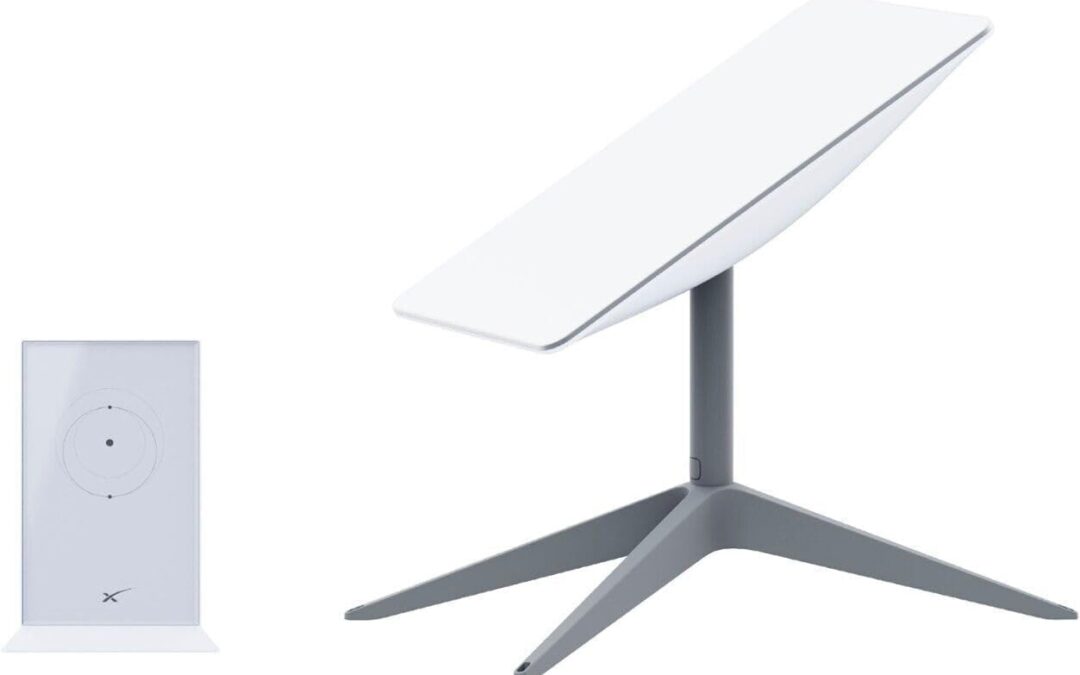
- Standard / Gen-3 (Rectangular / “Standard Actuated”) — common consumer / fixed terminal (many households & RVs). StarlinkSatellite Phone Store
- Starlink Mini — compact, backpack-portable kit with built-in router and low power consumption for on-the-go / Roam usage. Usable with external battery packs (has USB-C PD power input). StarlinkThe Verge
- Performance / Maritime High-Performance (Flat HPC / Gen-2 Performance Kit) — rugged, high-gain, IP-rated terminals engineered for maritime and commercial installations (higher throughput & durability). StarlinkGlobal Satellite
- Aviation terminal — certified installation packages for aircraft (specialized form factor, approved installs / STCs for larger aircraft; airlines are rolling installations). StarlinkReuters
Detailed specs — consumer Standard (Gen-3 / “Standard Actuated” terminal) & router
(official Starlink spec pages consolidated)
User terminal (Standard / Gen-3 / Rectangular)
- Antenna type: Electronic phased-array user terminal (actuated). Starlink
- Weight: ~2.9 kg (6.4 lb) (≈3.2 kg with kickstand). Starlink
- Dimensions: approx 594 × 383 × 39.7 mm (23.4 × 15.1 × 1.5 in). Satellite Phone Store
- Field of view: ~110°. Starlink
- Operating temp: −30 °C to +50 °C (−22 °F to 122 °F). Starlink
- Ingress rating: IP67 / Type-4 (dust-tight and water immersion resistance for consumer units; maritime/performance units have higher IP ratings). Starlink+1
- Mounts: multiple (flat, pole, magnetic options depending on kit). Satellite Phone Store
Starlink Wi-Fi Router (included)
- Wi-Fi standard: 802.11 a/b/g/n/ac/ax (Wi-Fi 6). Starlink
- Radio: Tri-band, 4×4 MU-MIMO. Starlink
- Ethernet: Two (2) latching Ethernet LAN ports (coverable). Starlink
- Coverage: up to ~3,200 ft² (≈297 m²) (manufacturer estimate). Starlink
- Operating temp & rating: rated for typical indoor use; router weight ≈ 0.57 kg (1.25 lb). StarlinkSatellite Phone Store
Power
- Typical power draw (Standard / Gen-3): average ~50–75 W during active use; idle ~20 W. Peak/surge at startup can be higher for brief periods. (Starlink publishes ranges by model; Mini and Performance units have different averages). Starlink+1
- Starlink Mini: average ~20–40 W, idle ~15 W and is designed to run from USB-C PD (100W PD recommended by SpaceX for reliable operation). StarlinkThe Verge
Starlink Mini (portable)
- Purpose: compact, backpack-portable kit for remote work/travel; built-in Wi-Fi router and DC/USB-C power input (PD). StarlinkThe Verge
- Max download in marketing: often advertised “over 100 Mbps” typical in favorable conditions; real world: often 30–150 Mbps depending on location and movement. StarlinkThe Verge
- Power: designed for battery operation (Starlink instructs 100W USB-C PD minimum for reliable use). The Verge
Maritime & Performance Kits
- Ruggedized terminals (Performance Kit / Flat High-Performance) are engineered for long life in corrosive salt environments, pressure washing, and extreme conditions; rated to higher IP levels and operational in high winds; designed for merchant, commercial and yachting customers. These kits also support higher throughput and specialized mounts. StarlinkGlobal Satellite
Installation notes & operational constraints
- Clear view of sky: Starlink requires a mostly unobstructed sky view for best operation; trees, tall buildings and heavy canopy will degrade performance. The Starlink app provides an install/line-of-sight tool. Starlink
- eSIM / roaming: Some Roam/On-the-Go plans allow use across many countries; check region-specific availability on Starlink’s site. Starlink has been moving toward eSIM-centric provisioning in many markets. Starlink+1
- Standby / Pause: Consumer customers can often pause service (Standby Mode) for a small monthly fee in selected plans — useful for RVs and seasonal users. Mobile Internet Resource Center
Starlink vs. Project Kuiper: The Next Chapter in Global Broadband from Space
The world is entering a new era of broadband access—one where high-speed, low-latency internet coverage could stretch from city centers to the most remote corners of the globe. Starlink, SpaceX’s pioneering satellite constellation, already powers thousands of homes, planes, and ships with dependable broadband connectivity. Now, Amazon’s Project Kuiper is gearing up to rival it, promising even faster speeds, lower prices, and deep integration with AWS.
This high-stakes contest between two mega-constellation networks could redefine how we connect—especially in rural areas, maritime zones, and aviation. In the sections that follow, you’ll find everything you need to understand how Starlink and Kuiper stack up: from satellite counts and deployment roadmaps to proposed speeds, pricing, and technical innovations. Let’s explore what’s launching, what’s live, and what the future may bring.
Comparison Table: Starlink vs. Project Kuiper
| Feature | Starlink (SpaceX) | Project Kuiper (Amazon) |
|---|---|---|
| Parent Company | SpaceX | Amazon |
| First Launch | May 2019 | April 2025 — first 27 satellites TechTargetThe Verge |
| Satellites in Orbit | ~8,000+ (Aug 2025) The VergeNew York Post | ~100 (Aug 2025) The VergeNew York Post |
| Planned Constellation | Up to 12,000+ satellites TechTargetGulf News | ~3,236 satellites total TechTargetTomorrow Desk |
| Orbit Altitude | ~440–550 km TechTargetGulf News | ~590–630 km HighSpeedOptions.comTomorrow Desk |
| User Terminals & Specs | – Standard / Actuated — 25–150 Mbps – Mini — portable, similar speeds – High-Performance & Enterprise: up to 220 Mbps TechTarget | – Portable (7″): up to 100 Mbps – Standard (11″): up to 400 Mbps – High-Bandwidth (19 × 30″): ~1 Gbps TechTargetTomorrow DeskTechRadar |
| Demo Speeds | Real-world typical: 50–300 Mbps; latency ~20–60 ms Starlink: The Future of Net ConnectivityCryptocurrency News Media | Enterprise demo: 1.29 Gbps on Speedtest TeslaNorth.com; consumer speeds untested in live use |
| Latency | 20–60 ms in real-world use HighSpeedOptions.comStarlink: The Future of Net Connectivity | Likely similar or slightly higher due to altitude (no real data yet) HighSpeedOptions.comStarlink: The Future of Net Connectivity |
| Routing Architecture | Laser-based inter-satellite links for global mesh routing HighSpeedOptions.com | Relies on gateways and AWS cloud; no confirmed laser links publicly HighSpeedOptions.com |
| Pricing (Hardware) | ~US $599 (Residential dish); monthly plans ~$80–$120 DISHYtech | Terminal targeting < US $400 production cost; consumer pricing TBD Tomorrow DeskThe VergeDISHYtech |
| Service Availability | Live in 100+ countries — consumer, aviation, maritime plans live The Vergestarlinkhow.com | Beta expected late 2025; commercial rollout after deployment thresholds met Cinco DíasNew York Post |
| Unique Strengths | Proven service, global mesh network, growing coverage | AWS integration, potential lower costs, rural wholesale deals (e.g., Australia) The AustralianHighSpeedOptions.com |